
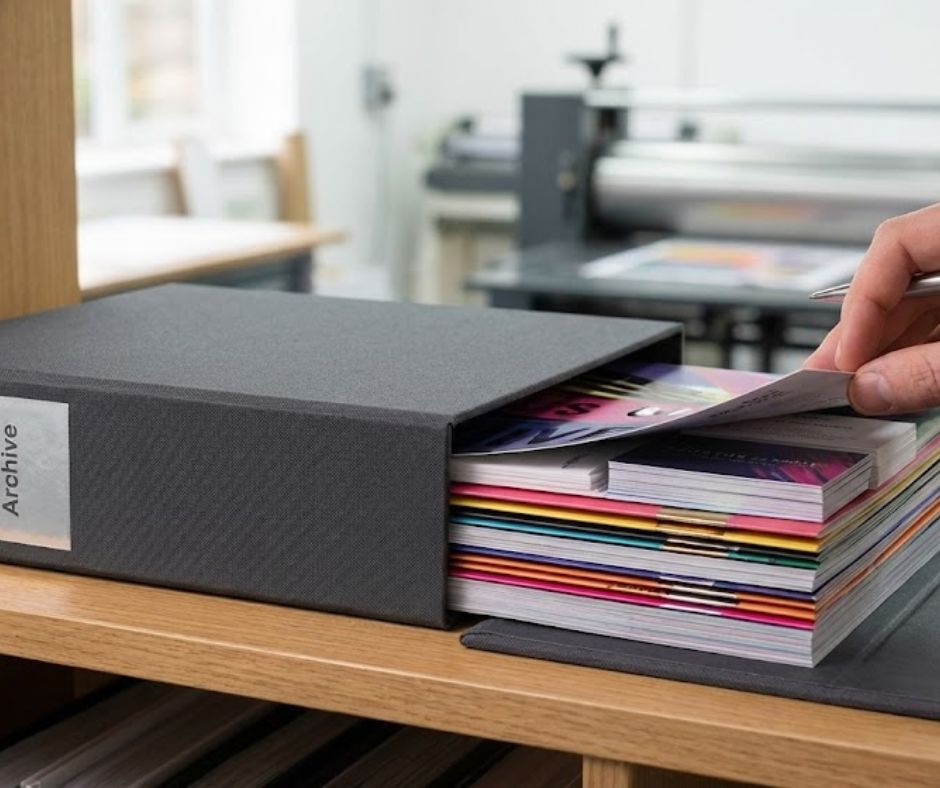
As the year winds down, the instinct to tidy up is strong. We clear our inboxes, organize server folders, and archive digital projects from 2025 into the digital ether. It feels virtuous to have a clean desktop, ready for the new year. But amidst this digital decluttering, there’s a critical asset that often gets overlooked: the physical remnants of your year’s hard work.
In our increasingly screen-based world, it’s easy to forget that print is a tactile medium. A PDF on a screen is a poor substitute for the real thing. It’s flat, lifeless, and disconnected from the physical reality of the final product. That’s why, before you close the book on 2025, you need to gather one pristine copy of every significant piece of print marketing you produced and put it in a physical archive.
This isn’t about hoarding. It’s about preserving the tangible history of your brand and creating an invaluable resource for your future self.
Beyond the Screen: Reconnecting with Quality
Think about the effort that went into your best print campaigns of 2025. You didn’t just pick colors and fonts; you chose paper stocks, varied weights, and perhaps experimented with special finishes like spot UV, embossing, or foil blocking.
None of that translates to a screen.
When you look back at a digital file in two years, you won’t remember how the heavy, uncoated card of that luxury brochure felt in your hand. You won’t see how the light caught the gloss varnish on your premium business cards. A physical archive preserves these sensory details. Holding the actual object instantly reconnects you with the quality and intent of the original design in a way a file name in a folder never could. It reminds you of the high standards you set and achieved.
A Tangible Timeline of Brand Evolution
Your brand is a living thing. It evolves slowly, often in ways you don’t notice day-to-day. A physical print archive serves as a tangible timeline of that evolution.
Laying out your 2025 marketing materials next to pieces from 2023 or 2024 reveals a story. You can see how your messaging has sharpened, how your visual identity has matured, or how your priorities have shifted. This physical comparison is far more intuitive and impactful than clicking between open windows on your computer. It helps you ensure consistency while acknowledging growth, providing a clear benchmark for where you’ve been and where you’re heading.
Curing Creative Block with Past Successes
We all hit creative walls. When you’re staring at a blank page in 2026, struggling for a fresh idea for a new campaign, your print archive can be your best brainstorming tool.
Stepping away from the screen and physically flipping through a portfolio of your past successes can spark new connections. You might rediscover a forgotten layout technique, a bold color combination you haven’t used in a while, or a clever copywriting angle that resonated with your audience. It’s not about copying your old work; it’s about letting the proven quality of your past inspire your future. The tactile act of browsing through physical print engages a different part of your brain than scrolling through a digital gallery.
How to Build Your Archive
Building a print archive doesn’t need to be complicated.
- Select the Best: You don’t need every single flyer. Choose one pristine copy of your most significant work: brochures, annual reports, direct mail campaigns, premium business stationery, and event materials.
- Store it Safely: Invest in an acid-free archival box or a dedicated flat-file drawer. Light, heat, and moisture are the enemies of print, so keep your archive in a cool, dry, dark place.
- Label Clearly: Mark the box or portfolio clearly with the year, for example, “Marketing Archive – 2025”.
Your digital files are just data. Your physical prints are history. Take the time this December to preserve them. Your future self—and your future marketing campaigns—will thank you for it.